Battle With Ideas What Is the Battle of Ideas?
From the Royal College of Art in 2005 to Church House today — a festival where the audience is part of the argument.
The Battle of Ideas is a weekend festival of public debate organised by the Academy of Ideas. It was founded in 2005 by Claire Fox, who remains Director, and is co-convened with figures such as Alastair Donald and Ella Whelan. The first edition took place at the Royal College of Art. Since then the festival has grown into a dense programme of panel debates, keynotes, and satellite gatherings across the UK and Europe — always with the same stubborn premise: adults should be allowed to argue in public without being managed into silence.
FREE SPEECH ALLOWED / FREE THINKERS WELCOME
The motto is printed large for a reason. FREE SPEECH ALLOWED is a statement of method: sessions are built so that contested, unpopular, or unfinished arguments can be heard and answered. FREE THINKERS WELCOME is a statement of hospitality: you do not need to arrive already aligned with the organisers’ politics. You need curiosity, nerve, and a willingness to be challenged. For a deeper dive into how that culture shows up in the room, read the FREE SPEECH ALLOWED Guide.
The Academy of Ideas orbit
The festival sits inside a wider Academy of Ideas project that includes Letters on Liberty pamphlets, Debating Matters for sixth-formers, an audio archive, a busy YouTube presence under @battleofideas, and essays on Substack. Claire Fox’s own public life — from the Revolutionary Communist Party years through the Spiked orbit, a 2019 Brexit Party MEP term, a life peerage as Baroness Fox of Buckley in 2020, long service on Radio 4’s Moral Maze, and the book I STILL Find That Offensive! — frames why the festival treats offence and disagreement as problems to be argued through, not administered away. Official sites are battleofideas.org.uk and academyofideas.org.uk; this wiki is an independent orientation layer.
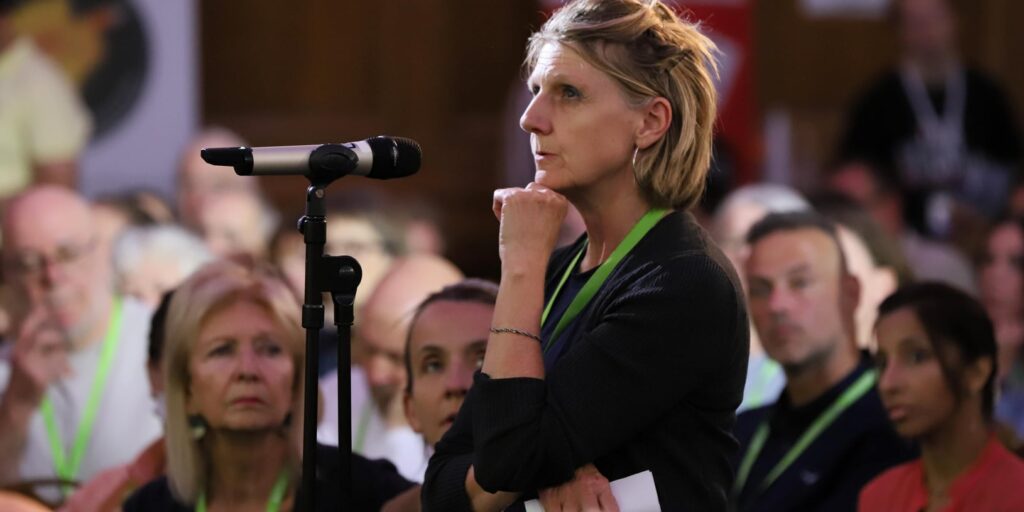
Audience is the festival
Organisers repeatedly describe the crowd as co-authors of the weekend. Panels are not TED-style monologues followed by polite applause. Floor contributions, sharp questions, and disagreement from the hall are part of the design. That is why practical pages such as How to Attend and How to Debate Better matter as much as speaker lists: the quality of the festival tracks the quality of the audience. First-timers should also skim the First-Timer Guide before choosing sessions.
Scale and venues
The London centre of gravity is Church House, Westminster (Deans Yard, SW1P 3NZ), sometimes paired with the Abbey Centre for overflow. The 2025 edition — the twentieth festival — ran 18–19 October with roughly 400 speakers, 100+ debates, and more than 3,000 attendees. 2026 London is set for 17–18 October at Church House, with Abbey Centre also in play on the Saturday. Satellite cities have included Buxton, Manchester (North), Paris, Helsinki, Zurich, and others. Berlin 2026 (28 November, EFG Tempelhof, with Freiblickinstitut) extends the format into a bilingual English–German day — see Berlin 2026 Satellite and Tickets & Venue for logistics.
What kind of topics appear
Programmes typically range across politics, science, education, culture, technology, identity, geopolitics, and the future of free speech itself. Themes change with the year; the method does not. Expect panels that put opposing views on the same stage and chairs who keep time without sanding off conflict. Schools and students have historically been courted with concession pricing and projects such as Debating Matters — another signal that the festival wants the next generation inside the argument, not shielded from it.
How to use this wiki page
Treat this article as the conceptual front door. Once you understand the mission:
- Check dates and rooms via the Festival Hub and Tickets & Venue.
- Plan your first weekend with How to Attend and the First-Timer Guide.
- Practise contribution skills in How to Debate Better.
- If you want to help run the rooms, read How to Volunteer.
Why it still matters
Public life increasingly routes disagreement through platforms, HR policies, or institutional risk teams. The Battle of Ideas insists on a different habit: put the claim on a stage, answer it with reasons, and let an audience judge. That habit is fragile. It depends on organisers who will book difficult speakers, chairs who will protect time for challenge, and attendees who will listen before they strike. Twenty years after the RCA debut, the festival’s claim is still simple — and still contested enough to need defending every autumn in Westminster, and now again in Berlin.
If you arrived here wondering whether the Battle of Ideas is a party conference, a campus seminar, or a media junket, the short answer is none of the above. It is a civic festival of argument. The long answer is the weekend itself — and the pages linked from this Festival Hub will help you walk into it prepared.
Frequently Asked Questions
Quick answers drawn from festival programmes and public records.
Who founded the Battle of Ideas?
The Academy of Ideas founded the festival in 2005 under Claire Fox (now Baroness Fox of Buckley). She remains Director; co-convenors include Alastair Donald and Ella Whelan.
Where was the first festival held?
The first Battle of Ideas took place at the Royal College of Art in 2005. The main London venue today is Church House, Westminster.
What does “the audience is the festival” mean?
Sessions are designed for challenge from the floor, not one-way talks. Attendees are expected to question, disagree, and contribute — which is why etiquette and debate guides sit beside ticket pages.
Is the Battle of Ideas only in London?
London is the flagship weekend, but satellite events have run in UK and European cities. Berlin 2026 is a major bilingual satellite on 28 November at EFG Tempelhof.
Where can I watch past debates?
Many sessions are archived on the @battleofideas YouTube channel, with additional audio on the Academy of Ideas website.